FILTERS

  • Filters-filtreler-filtres-filtros-фильтры

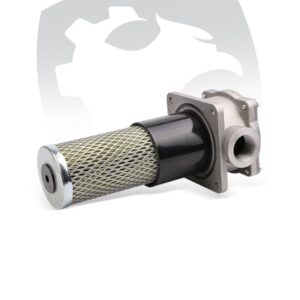
    1TFH40 & 1TFH50 HYDRAULIC RETURN FILTERS

    SKU:1TFH40
    Specifications
    Flow Range 260 – 480 l/min (68.7 – 126.8 GPM)
    Filtration Value 10 μm – 60 μm
    By-Pass Valve 1.7 bar (24.7 PSI)
    Body Type Aluminum Head / Steel Filter Element


    These hydraulic return filters are designed to protect hydraulic systems by removing contaminants from the return line before the oil reaches the reservoir.

    With TFH40 and TFH50 series, flow capacity ranges from 260 l/min to 480 l/min (68.7 – 126.8 GPM). Filtration options are available in 10 μm, 25 μm and 60 μm to suit different hydraulic applications.

     

End of content

End of content

Hydraulic Filters Technical Catalog

Access complete micro-rating curves, maximum flow rate specifications, and structural thread charts for the Hayneks Premium Filtration Series.

Download Technical PDF

Global Hydraulic Excellence by Hayneks Hydraulic. Prevent catastrophic component wear and secure maximum system uptime with our professional-grade HYDRAULIC FILTERS. Up to 80% of all hydraulic machinery breakdowns are directly caused by particle fluid contamination. The Hayneks filtration framework targets micro-impurities through advanced structural multi-layer glass fiber matrices. Engineered for low differential pressure ($Delta p$) drop and superior dirt-holding capacities, our complete solution portfolio protects high-precision piston pumps, proportional valves, and heavy-duty cylinders across mobile vocational trucks and heavy industrial manufacturing circuits.

Hydraulic Filtration Systems: Technical FAQ

1. What classification criteria define the high efficiency of Hayneks hydraulic filters?

Our Hydraulic Filters are manufactured and tested in absolute compliance with ISO multi-pass test standards. Utilizing advanced micro-glass fiber media and specialized structural multi-layer synthetic configurations, our elements deliver a high Beta ratio ($beta_x ge 200$), ensuring deep particulate separation and stable fluid cleanliness under severe cyclic flow stresses.

2. What are the key distinctions between suction, return, and pressure filters?

Each serves a specific architectural role: Suction Filters protect the hydraulic pump from large debris entry from the reservoir; Pressure Filters are heavy-duty, inline housings positioned downstream of the pump to shield ultra-sensitive servo or proportional valves; Return Filters mount at the reservoir tank entry to capture all particulate accumulation generated by mechanical cylinder or motor friction before it re-enters the fluid storage tank.

3. How does absolute micron rating compare to nominal filtration ratings?

Nominal filtration indicates an arbitrary percentage of particle retention (typically 50% to 70%), which permits harmful micro-abrasives to continuously pass through the system. Absolute filtration ratings, backed by verified ISO standards, guarantee the capture of up to 99.5% or higher of target micronic contaminants (e.g., $3 mu m, 10 mu m$, or $25 mu m$) at the stated micron dimension.

4. What type of structural clogging indicators can be configured on Hayneks housings?

To prevent the filter element from entering automated bypass mode, we supply robust monitoring indicators. Installers can specify traditional Visual pressure gauges for manual fleet auditing, Electrical differential switches for telemetry signaling, or dual visual-electrical indicator mechanisms that alert operators when differential pressure limits are reached.

5. Why do Hayneks return line filters incorporate a specialized bypass valve configuration?

During extreme cold-start operations, hydraulic fluid viscosity increases dramatically, creating a temporary artificial pressure spike across the filter element. Our integrated bypass valves open precisely at calibrated cracking thresholds (typically 1.5 to 3 bar depending on housing configuration) to prevent structural element collapse, ensuring continuous oil circulation until operating temperatures stabilize.

6. What type of port connections and spatial threads are supported on the filter housings?

Our filter housings conform strictly to international standardizations, providing high-strength machined ports with options for standard BSP parallel threads, NPT configurations, metric sizes, or SAE split-flange coupling configurations. This ensures direct inline mechanical integration without auxiliary adaptors.

7. Which industrial and mobile sectors benefit most from absolute filtration setups?

Absolute micron-glass filtration is critical for any circuit using high-pressure gear, vane, or variable piston pumps. This incorporates heavy mobile construction excavators, tipping commercial transport fleets, industrial concrete pumps, injection molding setups, and scrap metal waste recycling balers.

8. What is the structural importance of regular hydraulic breathers on fluid reservoirs?

As hydraulic cylinders extend and retract, the internal oil level in the reservoir fluctuates constantly, drawing atmospheric air into and out of the tank. Hayneks tank-top air breathers utilize high-efficiency spin-on elements to capture incoming airborne dust and moisture, stopping contaminants from corrupting the fluid circuit from above.

9. Are Hayneks filter replacement elements cross-compatible with global brand frameworks?

Yes. Our replacement filter elements are engineered to achieve absolute dimension and structural media equivalence to dominant global OEM brands. Matching exact end-cap heights, structural inner support bypass designs, and internal seal materials, they function as premium, cost-effective drop-in drop replacements.

10. What preventive maintenance schedule is required for hydraulic filter change-outs?

While clogging indicators offer the safest real-time feedback, as a standard fleet maintenance rule, we recommend replacing high-pressure elements after the initial 100 hours of system commissioning to catch manufacturing debris, and every 500 to 1000 operating hours thereafter depending on environmental conditions.

Adress

Hardoks Industrial Site, Fevzi Çakmak Neighborhood, Ahmet Petekçi Street No: 15B, Karatay, 42050 Konya, TURKEY

2025 Hayneks Hydraulic. All Rights Reserved.