
End of content
End of content
Hydraulic Control Valves – Technical FAQ
Precision in Hydraulic Power Transmission requires high-performance control components. Hayneks manufactures heavy-duty Directional Control Valves designed for global mobile hydraulics and industrial applications. This guide addresses the technical aspects of selection, maintenance, and system integration.
1. How do Directional Control Valves function in a hydraulic system?
Directional control valves act as the brain of the hydraulic circuit, directing high-pressure fluid to the specific actuator (cylinder or motor). They manage the start, stop, and direction of flow, typically using a sliding spool mechanism to open or close internal ports.
2. Open Center vs. Closed Center: What is the difference?
In an Open Center valve, fluid flows back to the tank when the lever is in neutral, which is standard for fixed displacement pumps. Closed Center valves block the flow in neutral, maintaining constant pressure, making them ideal for variable displacement systems and more energy-efficient operations.
3. Why is matching Flow Rate (LPM) critical for system safety?
The Liters Per Minute (LPM) rating of your valve must meet or exceed your pump's output. An undersized valve will cause excessive backpressure, fluid overheating, and significant power loss. A correctly sized valve ensures smooth operation and protects the hydraulic pump's longevity.
4. Can Hayneks valves be controlled remotely from a truck cabin?
Yes. We offer multiple Remote Actuation kits, including Pneumatic (Air) shifters, which are common in tipper trucks, and 12V/24V Solenoid controls for electronic integration and precision automation.
5. What is Spool Overlap and its impact on precision?
Spool overlap refers to the distance the internal spool moves before it opens the flow path. Positive overlap ensures that the load doesn't "drift" when the valve is in neutral, which is a critical safety feature for cranes and lifting equipment.
6. When should I choose a Sectional Valve over a Monoblock Valve?
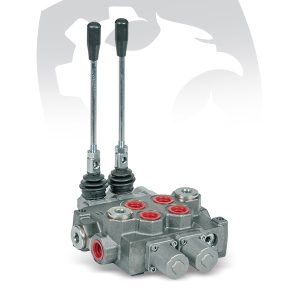
Choose Sectional Valves if you need a modular system where each spool has a different function (e.g., one section for a winch, another for a boom). For standard, high-volume applications like simple dump trucks, Monoblock Valves are preferred for their compact size and superior leak resistance.
7. What are the common causes of hydraulic valve sticking?
Valve "sticking" is usually caused by Oil Contamination. Fine debris can enter the tight tolerance between the spool and the body. Regular oil changes and high-quality filtration are the best ways to prevent this and ensure reliable performance.
8. How do I adjust the integrated Pressure Relief Valve (PRV)?
Our valves include a built-in, adjustable PRV. By using the adjustment screw (usually protected by a cap), you can fine-tune the maximum pressure (BAR). This ensures that if the load exceeds the system's limit, the oil is safely bypassed to the tank.
9. Are these valves compatible with international truck brands?
Hayneks products are designed for the global market. Our control valves are fully compatible with hydraulic circuits for Mercedes-Benz, Volvo, Scania, DAF, Iveco, and ZF transmissions, and comply with international ISO and BSP threading standards.
10. How to identify the correct port size for installation?
Most Hayneks valves use BSP (G) threads. Port sizes typically range from 3/8" for low flow to 1" for high-flow industrial systems. Always check the technical drawing of the valve to ensure your hoses and fittings match the intake (P), return (T), and working (A/B) ports.