Power Take Off (PTO) Systems: The Ultimate Engineering Guide for Global Trucking Fleets
✅ The Driving Force Behind International Logistics and Construction
In the global heavy-duty trucking and construction industry, a vehicle is only as productive as the auxiliary equipment it powers. Whether it’s a dump truck operating in a European quarry, a recovery vehicle on an Asian highway, or a concrete mixer in a Middle Eastern urban development, the Power Take Off (PTO) system is the silent powerhouse making the heavy lifting possible.
A PTO is the critical mechanical link that transforms a standard commercial truck into a highly specialized workhorse. At Hayneks Hydraulic, we supply precision-engineered PTO systems to fleets worldwide. We understand that equipment downtime is the enemy of global profitability. Therefore, choosing a high-performance, technically compatible PTO is not just routine maintenance—it is a strategic engineering decision that impacts your entire operation.
✅ What is a PTO & How It Works (The Engineering Perspective)
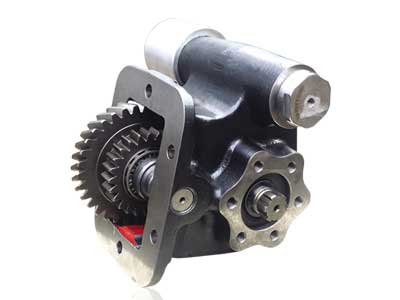
A Power Take Off (PTO) is a dedicated, precision-machined gearbox that mounts directly to a commercial truck’s primary transmission.
- The Simple Explanation: Think of it as a mechanical “power tap.” It safely redirects the rotational energy generated by the truck’s engine away from the drivetrain, sending it instead to auxiliary tools, most commonly hydraulic pumps or compressors.
- The Technical Explanation: The PTO features internal gears that physically mesh with the transmission’s gears (often the countershaft). When the operator engages the system typically via a pneumatic air valve or a mechanical linkage the PTO locks in and transfers rotational torque through its output shaft. This output shaft drives a hydraulic pump, converting mechanical rotation into high-pressure hydraulic fluid dynamics, which subsequently powers cylinders, winches, or blowers.
✅ Types & Configurations (Based on Global Engineering Standards)
Because truck manufacturers like Mercedes, Volvo, and ZF design their gearboxes differently, PTOs must be categorized to fit specific vehicle architectures. Based on our comprehensive engineering catalogs, here is how PTO systems are classified globally:
- 1. Mounting Positions on the Gearbox:
Side Mount (Left/Right): The most universally applied mounting position for standard vocational trucks and tippers.
Rear Mount (Kuyruk/Countershaft): Mounted at the rear of the transmission, providing a direct power line. This is ideal for continuous, high-torque requirements.
Bottom Mount: Utilized primarily when chassis frame clearance is a major constraint.
Rear and Side Combination: Specialized units designed for complex, multi-pump hydraulic circuits. - 2. Engagement (Control) Systems:
Pneumatic (Air Shift): The global standard for modern commercial vehicles. It utilizes the truck’s onboard air compressor (requiring a minimum of 6 Bar / 90 PSI) for smooth, reliable engagement.
Mechanical (Lever/Cable): Controlled via a physical linkage in the cabin. It is highly rugged and often preferred in extreme environments where pneumatic lines might freeze or fail.
Vacuum/Hydraulic: Often found in medium-duty commercial vehicles and specific utility applications.
✅ Decoding Output Interfaces and Rotation Directions
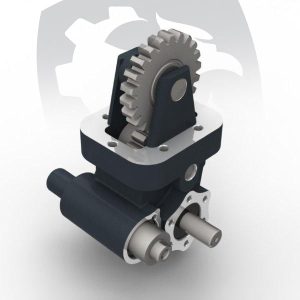
One of the most critical aspects of PTO selection—and where many procurement errors occur—is matching the output type and rotation to the hydraulic pump.
- Output Types (PTO Outlet):
ISO: The standardized 4-bolt mounting flange used widely across European and global heavy-duty pumps.
UNI: The standard 3-bolt mounting interface.
Flanged (With Flange): Designed for connecting directly to a mechanical driveshaft (cardan shaft) rather than a direct-mount pump.
Shaft (With Shaft): Features a specialized protruding shaft for specific coupling mechanisms. - Rotation Direction (Crucial for Pump Survival):
CCW (Counter-Clockwise / Sol): Left-hand rotation.
CW (Clockwise / Sağ): Right-hand rotation.
Engineering Note: The PTO’s rotation must always be the opposite of the hydraulic pump’s required input direction. If you connect a CW pump to a CW PTO, the pump will not draw fluid and will suffer catastrophic cavitation within seconds.
✅ How to Choose the Right PTO: A Global Decision-Making Guide
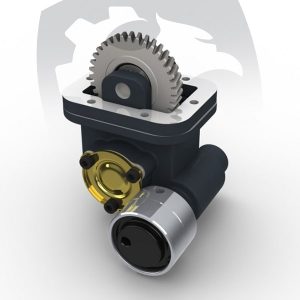
Selecting the exact hydraulic PTO system for your global fleet requires strict adherence to technical parameters:
- Identify the Exact Gearbox Model: Knowing you have a “Volvo” or “Scania” is insufficient. You must locate the ID tag on the transmission housing to find the exact model code (e.g., ZF 16S251, Mercedes G155, or Mack mDRIVE).
- Calculate Torque and Speed Demands: Ensure the PTO’s continuous torque rating safely exceeds your equipment’s maximum load. You must also calculate the speed ratio (e.g., 1/1 or 1/1.34) to ensure the pump receives the correct RPM at standard engine idle.
- Verify Clearance: Check the physical space on the truck chassis. Interference with exhaust pipes or frame rails may force you to choose a rear-mount over a side-mount.
✅ Technical Specifications Breakdown: Supporting the World’s Leading Brands
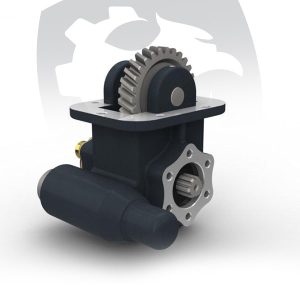
At Hayneks Hydraulic, our production lines cover the entire spectrum of global commercial vehicles. Here is an insight into our transmission compatibility capabilities:
- European Heavy-Duty: Full PTO ranges for Mercedes, ZF, Scania, Volvo, Iveco, DAF, and Renault. For instance, our ZF-compatible units can handle immense torque loads approaching 480 Nm, suitable for heavy cranes and multi-axle dump trucks.
- American Powertrains: Precision-engineered units for Eaton-Fuller, Allison, Mack, and Turner transmissions, designed to meet the rigorous demands of North American and global mining operations.
- Asian Commercial Vehicles: Compact, high-efficiency mechanical and pneumatic PTOs for Isuzu, Mitsubishi, and Hyundai light to medium-duty trucks.
- Specialized & Legacy Equipment: We also support rugged, specialized applications including Liaz transmissions, ensuring older or highly specialized fleets remain operational.
✅ Installation / Best Practices: Pro Tips for Mechanics
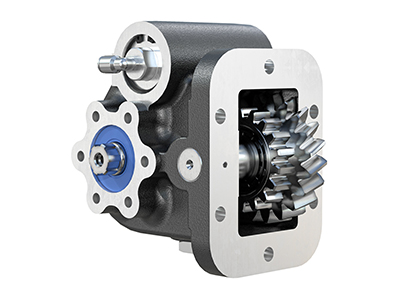
A flawless PTO can be destroyed in ten minutes by a faulty installation. Mechanics worldwide should follow these standardized steps:
- Surface Preparation is Non-Negotiable: Drain the gearbox oil and remove the PTO aperture cover. Scrape away absolutely all old gasket material. Even a microscopic piece of debris will alter the gear alignment and cause severe leaks.
- Setting the Gear Backlash (The Sound Test): Use the supplied gaskets to adjust the distance between the transmission gear and the PTO gear. Run the engine for a few seconds. If you hear a high-pitched whining sound, the gears are meshed too tightly (add a thicker gasket). If you hear a clattering sound, the gears are too loose (use a thinner gasket).
- Adhere to Torque Specs: Never guess the tightness of the mounting bolts. Use a calibrated torque wrench. Standard 6-bolt PTOs generally require 60 Nm of torque, while heavier 8-bolt or rear-mounted units require 70 Nm.
- Pneumatic Integrity: Ensure your air lines are cut perfectly square and seated deeply into the fittings. An air leak will cause the PTO to partially disengage under heavy load, instantly stripping the gear teeth.
✅ Common Problems & Solutions (Real-World Troubleshooting)
- Problem: The PTO refuses to engage or grinds when shifting.
Solution: First, check the vehicle’s air pressure; it must be consistently above 6 Bar. If the pressure is fine, check for moisture or ice in the pneumatic shift cylinder, a common issue in colder global climates. - Problem: Oil is leaking rapidly from the PTO output shaft.
Solution: This usually points to a blown shaft seal. However, the root cause is often excessive vibration from an unsupported, heavy direct-mount hydraulic pump. Ensure your heavy pumps have rear support brackets installed. - Problem: The PTO housing is generating excessive heat.
Solution: This is a classic symptom of gears meshed too tightly (incorrect gasket thickness) or operating the PTO well above its rated duty cycle or RPM limits.
✅ FAQ
Can I use the same PTO on different truck brands?
Generally, no. Transmissions from different brands (like Scania vs. Isuzu) have entirely different gear pitches, pressure angles, and mounting bolt patterns. You must buy a PTO engineered specifically for that exact transmission model.
What happens if I engage the PTO while driving?
Unless you are using a highly specialized “Power-at-Speed” system, engaging the PTO while the vehicle is in motion will cause massive mechanical shock, stripping the gears in both the PTO and your main transmission.
Why do I need to know my pump’s rotation before ordering a PTO?
If you pair a Clockwise (CW) PTO with a Clockwise (CW) pump, the pump’s internal gears will spin backward. It will fail to draw hydraulic oil and will destroy itself through dry friction in a matter of seconds.
Does installing a PTO affect my transmission oil maintenance?
Yes. Because the PTO shares the transmission’s oil bath, it introduces additional heat and slight wear particles. Fleet managers should follow accelerated transmission oil change intervals.
Do you ship PTO systems internationally?
Yes. Hayneks Hydraulic manufactures and exports premium PTO systems, hydraulic pumps, and accessories to fleet operators, distributors, and OEMs worldwide.
✅ Engineering Your Global Fleet for Maximum Reliability
A Power Take Off system is the mechanical heart of your vocational vehicle’s capabilities. By selecting a high-quality hydraulic solution and strictly following professional installation parameters, you protect your primary transmission, minimize vehicle downtime, and maximize your operational ROI.
Ready to upgrade your fleet’s hydraulic performance?
- Request a Global Quote: Contact our team with your exact transmission model for pricing and international shipping details.
- Consult Our Engineering Team: Unsure about torque ratings or ISO/UNI compatibility? Our technical experts are ready to assist.
- Explore Our Products: Discover our full range of PTOs, gear pumps, and hydraulic accessories designed for the world’s toughest environments.