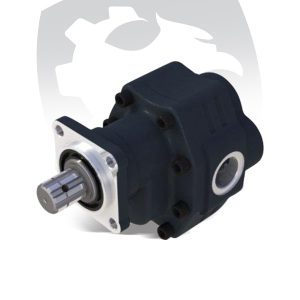
What Is a Piston Hydraulic Pump?
A piston hydraulic pump is a type of hydraulic pump that moves hydraulic fluid by changing the volume of a chamber through the reciprocating motion of pistons. This volume change creates a high-pressure, controlled fluid flow within the system. Thanks to their durable construction, piston hydraulic pumps are well-suited for demanding operating conditions.

How Do Piston Hydraulic Pumps Work?
Piston hydraulic pumps operate on a simple yet highly effective principle. When the piston moves forward, a vacuum is created inside the pump, drawing hydraulic fluid into the chamber. When the piston moves backward, the fluid is compressed and discharged from the pump. This cycle repeats continuously, providing a steady and reliable flow.
The piston movement is typically driven by an electric motor or an internal combustion engine.
Types of Piston Hydraulic Pumps
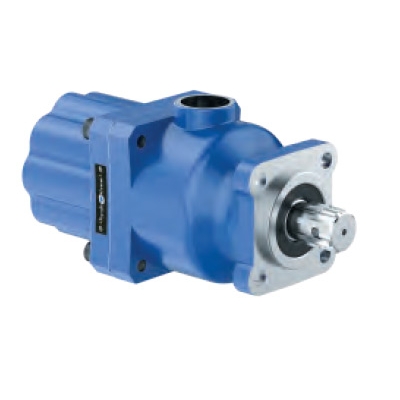
Piston hydraulic pumps are generally classified into two main types: axial piston pumps and radial piston pumps.
Axial Piston Hydraulic Pumps
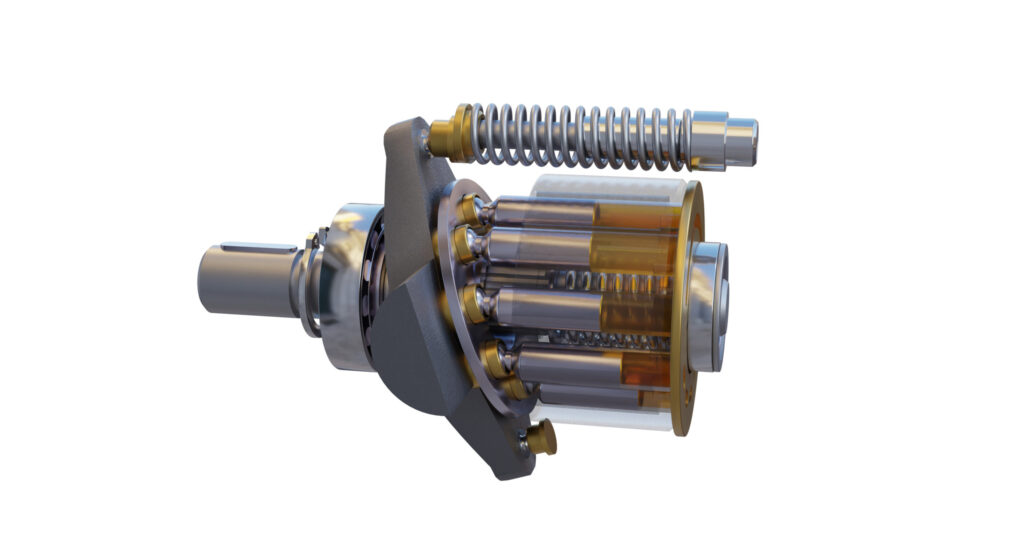
Axial piston hydraulic pumps feature pistons arranged in a circular pattern within a cylinder block. As the cylinder block rotates, the pistons move back and forth, continuously drawing in and discharging hydraulic fluid.
These pumps are widely used in high-pressure hydraulic systems due to their high efficiency and compact design.
Radial Piston Hydraulic Pumps
Radial piston hydraulic pumps have pistons arranged radially, similar to the spokes of a wheel. They deliver excellent performance in applications that require extremely high pressure.
Although they are highly durable, their structural complexity generally makes them more expensive than axial piston pumps.
Main Components of Piston Hydraulic Pumps
The performance of piston hydraulic pumps depends on properly designed components working together in harmony. The main components include:
Cylinder Block
The cylinder block is the main housing that contains the pistons. It is manufactured from robust materials to withstand high operating pressures.
Piston
Pistons are the most critical components of the pump. Their reciprocating motion enables the suction and discharge of hydraulic fluid.
Control Valve
The control valve regulates the direction and flow rate of the hydraulic fluid, controlling the operating speed of the pump.
Advantages of Piston Hydraulic Pumps
Piston hydraulic pumps offer numerous advantages. Their ability to withstand high pressure, long service life, and precise flow control makes them indispensable in many industries. In addition, their efficient operation helps minimize energy losses.
Applications of Piston Hydraulic Pumps
Piston hydraulic pumps are used in many sectors that demand high performance and durability.
Industrial Machinery
They are commonly used in manufacturing plants, press machines, and heavy-duty construction equipment.
Automotive Industry
In the automotive sector, piston hydraulic pumps play a key role in systems such as power steering and other hydraulic assist mechanisms.
Aerospace and Defense
In aerospace and defense applications, piston hydraulic pumps are critical components in aircraft hydraulic control systems and military equipment.
Common Issues with Piston Hydraulic Pumps
Like all mechanical systems, piston hydraulic pumps may experience wear, sealing issues, or performance loss over time. Early detection of these problems helps prevent costly repairs and system failures.
Piston hydraulic pumps are fundamental components of high-pressure hydraulic systems. Understanding their working principles, types, components, and applications helps ensure correct pump selection and improved system efficiency.
Frequently Asked Questions (FAQ)
What are the main types of piston hydraulic pumps?
There are two main types of piston hydraulic pumps: axial piston pumps and radial piston pumps.
Where are piston hydraulic pumps commonly used?
They are widely used in industrial machinery, the automotive industry, and aerospace and defense applications.
Why are piston hydraulic pumps preferred in high-pressure systems?
They are preferred because of their high-pressure resistance and long service life.
What are the main components of a piston hydraulic pump?
The main components are the cylinder block, pistons, and the control valve.
What powers piston hydraulic pumps?
Piston hydraulic pumps are typically powered by an electric motor or an internal combustion engine.
Contact Us
For questions, technical support, or customized solutions, please contact us.
Our expert team will be happy to assist you as quickly as possible.